
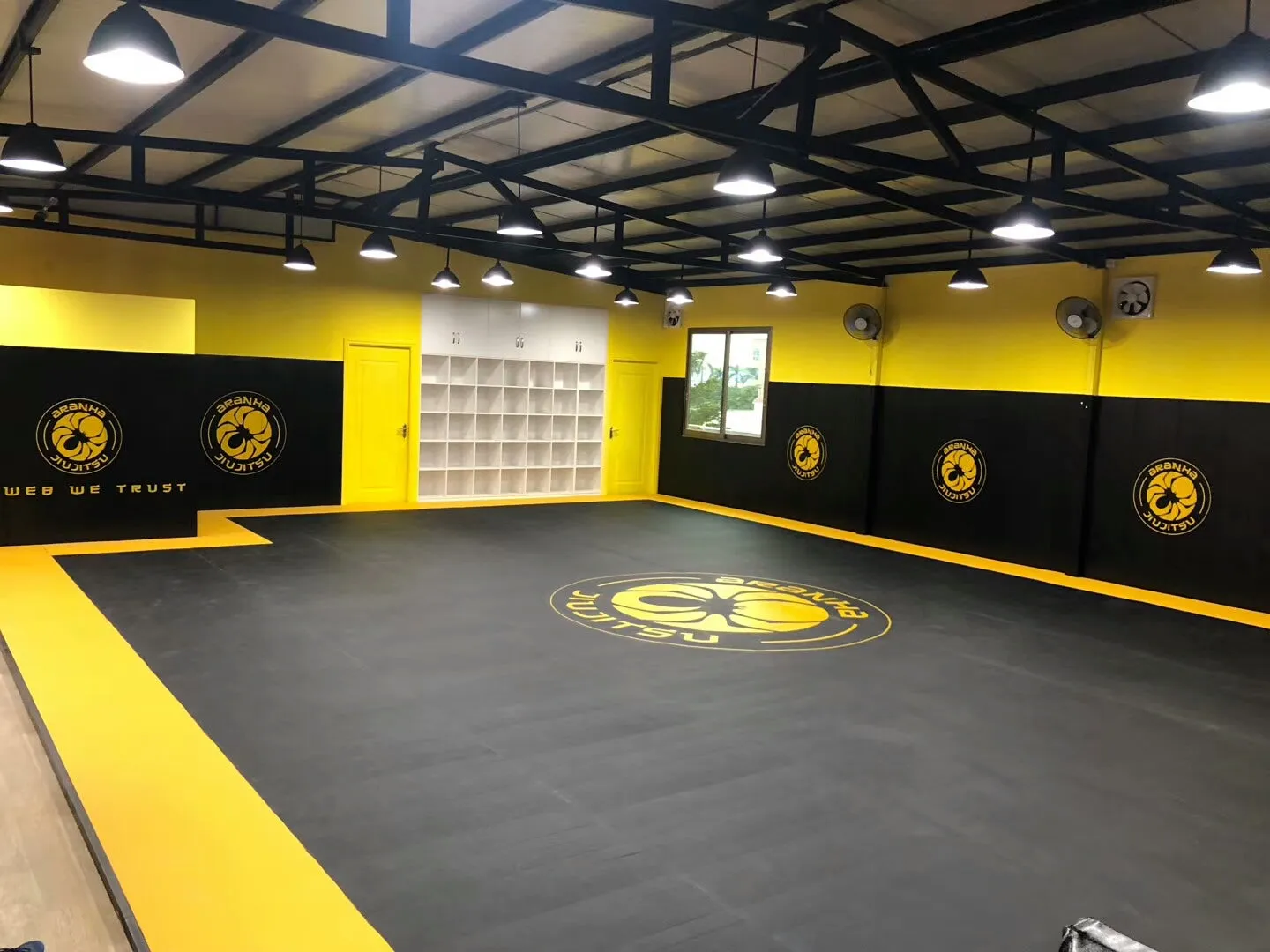
Flooring plays a much bigger role in a martial arts gym than many new owners expect. The right surface affects movement, comfort, impact absorption, cleaning, class organization, and how well a space supports different fighting styles.
A gym offering Brazilian Jiu-Jitsu, MMA, boxing, or Muay Thai may need more than one type of surface because each discipline places different demands on the floor. Before choosing materials, owners should consider how athletes train, how often the space is used, and whether the floor needs to support striking, grappling, takedowns, or all three.
Understand the Demands of Each Discipline
BJJ and wrestling involve frequent ground contact, transitions, takedowns, and rolling. These activities require a surface that gives athletes enough cushioning while still allowing them to move confidently.
MMA combines striking and grappling, which means the floor has to support both stand-up movement and ground work. Muay Thai generally involves more upright training, while boxing relies heavily on footwork and movement rather than repeated falls.
A multi-discipline gym should therefore avoid choosing flooring based on appearance alone. The surface needs to suit the actual training taking place every day.
Choose the Right Mats for Grappling Areas
For BJJ, wrestling, and MMA spaces, gym mats for martial arts should be selected with impact absorption, grip, thickness, and maintenance in mind. Mats that are too soft can make movement difficult, while surfaces that are too hard may be uncomfortable during repeated takedowns and ground drills.
Owners should also think about how the mats connect. Large continuous areas can work well in busy academies because athletes can move freely without constantly crossing between different surfaces.
The training area should be large enough for several pairs to work safely without becoming overcrowded.
Think About Boxing and Muay Thai Zones Differently
Boxing areas do not always need the same thick matting used for grappling. Athletes spend more time moving on their feet, so stability and predictable traction are important.
Muay Thai training includes kicking, clinching, and some controlled throws, which may require more cushioning than a standard boxing area. The final choice should reflect the balance between movement and impact protection.
In mixed-use gyms, separate flooring zones can be useful. This allows one area to be optimized for ground training while another supports bag work, pads, and technical striking.
Pay Attention to Surface Grip
Good grip is essential, but more grip is not always better. A surface that feels overly sticky can interfere with pivots and foot movement, while one that is too smooth may become difficult to use during fast drills.
Footwear policies also matter. Boxing classes may use training shoes, while BJJ and MMA classes are often conducted barefoot.
Testing how a surface performs under the intended training conditions can help gym owners avoid choosing flooring that feels suitable in theory but uncomfortable during actual classes.
Add Protection Around High-Contact Areas
The floor is not the only surface that may need protection. In MMA, wrestling, and grappling facilities, athletes may frequently train near walls during takedown drills, clinch work, or positional exercises.
Installing gym wall padding for MMA in these areas can help create a more suitable training environment. Padding may be especially useful near mat zones where athletes regularly work close to structural walls.
Wall protection should be planned alongside flooring so there are no awkward gaps or hard surfaces in high-contact parts of the gym.
Consider Cleaning and Hygiene
Martial arts flooring needs frequent cleaning because athletes often train barefoot and may spend long periods in direct contact with the surface.
Owners should select materials that can be cleaned regularly without becoming damaged or excessively slippery. Seams and edges should also be monitored because dirt and moisture can accumulate in poorly maintained areas.
A consistent cleaning routine is especially important in BJJ and MMA gyms where athletes spend much of the session on the floor.
Plan for Heavy Daily Use
Commercial gyms experience much more wear than home training spaces. Equipment is moved, classes run throughout the day, and the same floor may support dozens of athletes.
Durability should therefore be considered alongside comfort. Replacing an entire floor after a short period can be far more disruptive than investing in a suitable surface from the start.
Owners should also keep spare sections or replacement options in mind if part of the training area becomes damaged.
Think About the Whole Gym Layout
Flooring decisions should connect with the rest of the gym design. Heavy bags, cages, rings, storage areas, and strength equipment all influence where different surfaces should begin and end.
Clearly defined zones can make a busy facility easier to manage. Athletes can move from warm-up areas to bag stations, mats, and sparring spaces without crossing through unrelated activities.
Planning these zones before installation can also reduce unnecessary cutting, repositioning, or flooring replacement later.
Conclusion
Choosing flooring for a martial arts gym requires careful consideration of training style, impact levels, grip, hygiene, durability, and overall facility layout. BJJ, MMA, boxing, and Muay Thai may share the same building, but they do not always place the same demands on the floor.
By matching each surface to the activity taking place above it, gym owners can create a more practical training environment that supports regular classes, coaching, maintenance, and long-term use.